The recently-passed Housing and Economic Recovery Act of 2008 allots $4 billion of federal money to assist communities with buying and rehabbing foreclosed properties, yet some communities have already stepped in to fight the blight in their neighborhoods.
Cleveland Heights is one of them. Known for its forward-thinking strategy towards such issues as integration, historic preservation and promoting independent businesses over past several decades, the city recently turned its attention to troubled duplexes on East Derbyshire Road. Using Community Development Block Grant funds from the federal government, the city purchased and renovated several distressed properties, transforming them into side-by-side, townhouse-style condominiums. The units range from 1,700 to 2,900 square feet; 3150 East Derbyshire, one of the first completed units to hit the market, is currently listed at $139,900, and the future homebuyer will benefit from tax abatement.
A recent article in the New York Times ("Communities Become Home Buyers to Fight Decay," 9/25/08) cited several cities across the U.S. using a combination of taxpayer and private money to buy and rehab foreclosed properties. These cities are trying to re-sell the properties to buyers or developers as a means of stimulating the troubled housing market and promoting redevelopment.
Although the housing decline is showing signs of slowing, these cities are stepping in because their leaders fear that the overwhelming volume of foreclosures and homes on the market will foster more blight. They also do not see the problem being solved entirely by the private market, despite the argument by the Bush administration and others that spending federal funds represents an unnecessary market intervention.
Some examples of cities acting as developers include:
* The city of Boston recently purchased four foreclosed homes in a troubled section of Dorchester. A developer then purchased the homes from the city. The developer will renovate the homes and place them back on the market for sale.
* In San Diego, the city is raising private money ($20 million so far) to buy, rehab and sell hundreds of properties. Investors includee the California State Retirement System and Washington Mutual bank.
* In Minneapolis, the Greater Metropolitan Housing Authority has bought 75 homes in a strategic area that has been hard hit by foreclosures. The housing authority plans to complete the rehab to help stimulate the local market.
How the $4 billion allotted by the feds will be allocated and spent - and how much Cleveland communities will receive - has not yet been determined, but officials expect to have more information by the year's end.
Many housing experts also wonder whether the recently passed housing bill is enough to combat the troubled market, and whether the new administration in 2009 will have to consider additional measures to ease the credit crunch and stem the tide of foreclosures.
For more information on the rehabbed condominiums on East Derbyshire Road in Cleveland Heights, visit these websites:
www.heightsobserver.org
www.clevelandheights.com
Wednesday, September 3, 2008
Friday, August 15, 2008
Good Borrowers, Better Loans:
New Legislation Eases Credit Crunch

We’ve all seen it. In recent months, even borrowers with good credit have become caught up in the credit crunch. The lenders, Fannie Mae and Freddie Mac have all tightened their lending restrictions. Some of this – such as the elimination of the all-too-easy credit that got us into this mess – is a good thing and will help to correct the housing market.
Yet some of it appears overly restrictive to observers, and passes the risks within the market along to good borrowers. For instance, in new condominium buildings that are not yet FHA-approved, some lenders have been requiring 10% or 15% down before they’ll provide a loan. These types of restrictions eliminate otherwise qualified buyers who have a 3% or 5% down payment in hand – the very type of good buyers that will help the housing market to right itself.
However, the Housing and Economic Recovery Act of 2008, a bill recently passed by Congress, will make it easier for good borrowers to get good loans.
Perhaps the biggest thing, beyond the $7,500 tax credit, is that FHA insured loans are getting cheaper. The FHA rates are more competitive with typical bank rates, the required down payment amount is 3.5%, and the mortgage insurance amount for those buyers that are putting down less than 20% (most of the market) is significantly cheaper than a conventional loan. Overall, this will make it cheaper and easier for buyers to get financing.
Other improvements that are taking place as a result of this legislation include:
• The elimination of seller-funded down payment assistance programs (which helped to facilitate increased foreclosures and other problems)
• Simplification of condominium project approvals (it will be easier for a buyer to get a good loan when buying a new condo)
• Higher mortgage loan limits (qualified buyers purchasing properties up to $271,050 can go FHA – providing them with a better financing option with lower mortgage insurance and 3.5% down payment requirement)
For more information, please click here.
To read the bill (HR.3221), please click here.
Friday, August 8, 2008
First Time Homebuyers Eligible for $7,500 Tax Credit

The U.S. Congress and President Bush recently passed the Housing and Economic Recovery Act of 2008. The legislation provides a first-time homebuyer tax credit of up to $7,500 (10 percent of the cost of the home, not to exceed $7,500).
Eligible properties include any single-family residence (including condos and co-ops) that will be used as a principal residence. Homebuyers must not have owned a principal residence within the last three years.
The tax credit means that if you are a first-time homebuyer and would otherwise owe $7,500 in taxes, then for the year in which you purchased the home, you would owe the IRS nothing.
The tax credit terminates on July 1st 2009. However, first-time homebuyers are eligible if they purchased a home after April 9th 2008.
The tax credit has an income limit: individuals earning no more than $75,000 or couples earning no more than $150,000 on a joint return. The credit is phased out above those caps ($95,000 and $170,000 respectively).
The tax credit must be repaid, over a period of 15 years. For instance, if you earn a credit of $7,500 then you would pay $500 per year over 15 years. This amounts to a zero interest loan from the federal government. If the home is sold before 15 years, then the remainder of the credit would be recaptured upon the sale. If the home does not sell for enough to repay the credit, then it is forgiven.
For more information, please visit www.federalhousingtaxcredit.com.
Friday, August 1, 2008
Ohio Fourth Nationally in Biotech Growth,
Spending and Research

Business Facilities Magazine recently released what’s being called one of the most detailed surveys ever to examine biotech growth, spending, and research.
Measuring all 50 states, it placed Ohio fourth - tied with Texas - in the overall rankings, and called the state a national leader in the field.
Jack Rogers, Business Facilities Editor-in-chief, told WCPN 90.3 that “the states that are doing really well are the ones that have coordinated efforts, that are leveraging university systems and laboratory initiatives and the institutions that they have and they’re really putting the whole thing together.”
More than 20 separate categories were considered to compile scores, and Ohio’s $146 billion-dollar bioscience economy involving more than 800 companies and organizations put the state among the national leaders.
The Third Frontier project - begun during the Taft administration to create high tech jobs - was praised for allocating more than $350 million dollars to biosceince-related development and commercialization. Also noted were education and research facilities at CASE, Ohio State, and the University of Cincinnati.
Friday, July 25, 2008
Housing Stimulus Bill Set to Pass in Congress

President Bush lifted his veto threat and the Senate passed a housing stimulus package on Wednesday. Some key provisions of the bill will affect residents of Northeast Ohio.
1. $300 million to help homeowners facing foreclosure refinance their mortgages into FHA loans. The lender would have to agree to take a loss on the original loan and lender participation is voluntary.
2. $3.9 billion in block grants to help local communities buy up (often vacant)foreclosed homes, rehab them, and resell them.
3. $15 billion in housing tax breaks, including $7,500 in tax credits to first time home buyers. This provision applies only to buyers who purchase between April 9th 2008 and July 1st 2009. The full tax credit is available only to homeowners making less than $75,000 (or couples earning less than $150,000). The tax credit must be paid back, interest-free, over the next 15 years.
Friday, July 18, 2008
Cleveland Ranks as 14th Most Walkable City by Walkscore.com

The website walkscore.com allows you to tally the walk-ability of your neighborhood, using a scale of 0 to 100 to measure the proximity of shops, schools, restaurants and coffee shops.
Recently, Cleveland was ranked as the 14th most walk-able city by walkscore.com. Downtown Cleveland as well as the city of Lakewood both ranked particularly high.
“Walkability is actually a stand-in for a convenient way of living," said Christopher Leinberger, a University of Michigan professor who studied walkability for the Washington, D.C.-based Brookings Institution and serves as a WalkScore advisory board member. "A higher walk score reflects a place that is walkable urban, it is vital. You're living the Seinfeld life, rather than the Tony Soprano life."
This weekend, you can celebrate the walk-ability – and bike-ability – of Lakewood by attending the “Walk and Roll” event. The neighborhood party will close two miles of streets for walking and cycling. The Rockport Square development in Lakewood is located within walking or biking distance of all of the amenities that the city has to offer. The Walk and Roll event will be centered around Lakewood Park and surrounding streets.
For more information on Walk and Roll, please visit their website at
www.walkroll.com.
Friday, July 11, 2008
Lakewood: One of the Best Places to Buy
an Old Home in the Midwest
From Lakewood Alive:
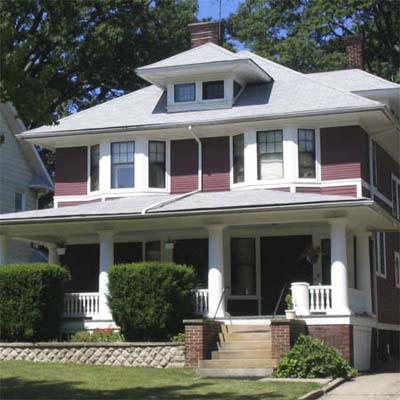
If you haven't already heard, Lakewood was named by This Old House Magazine as one of the best places in the Midwest to buy an old house. The article says:
"A well-established Cleveland bedroom community situated on Lake Erie, Lakewood has about 55,000 residents and thousands of single-family and multifamily homes built between 1890 and 1930. Locally owned shops, restaurants, theaters, and art galleries, strung behind vintage storefronts along a former streetcar line, are where families meet in summer-when they're not relaxing by the lake. Home to a celebrated public library, the Beck Center for the Arts, Lakewood also has great schools that have been making news for their rapid test-score gains and high graduation rates."
Thanks to the efforts of Marcia Moll, Paula Reed, and Mazie Adams who started over a year ago with "send us a one page statement of why your town is one of the best places to buy an old house." Obviously, Lakewood stands out!
Subscribe to:
Posts (Atom)
